1. Krishnadeva Raya's Gift & Praise of the Guru
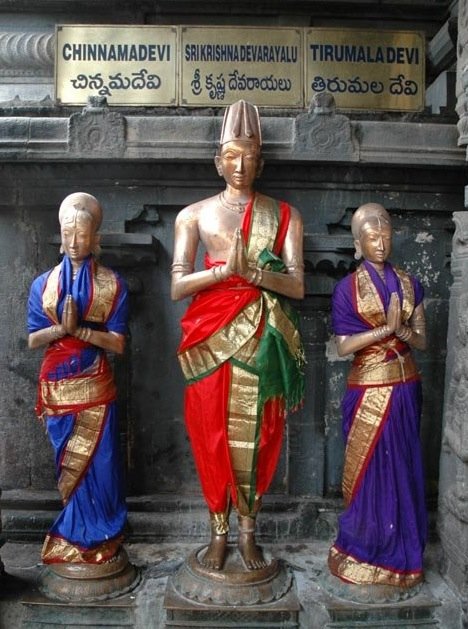
On the 23rd April, 1529 (nearly 500 years ago), the great Vijayanagara emperor Krishnadevaraya gifted a village named Udayampakkam to Sadasiva Sarasvati, disciple of Chandrasekhara Sarasvati of the Sri Kanchi Kamakoti Peetham.
Describing the Guru Sadasiva Sarasvati, Krishnadevaraya records in the charter that the Acharya was a Paramahamsa Parivrajakacharya Mumukshu, steeped in Ashtanga Yoga (the Patanjali yoga system), with his holy body smeared with sacred vibhuti (Bhasmoddhulita gatra), adorning garlands of holy Rudrakshas (Rudrakshavali dharin), one who had conquered the dualities of extreme cold and heat (Sitoshnadi dvandva-duhkha-atita), an embodiment of boundless compassion (Daya Sila), a sage of deep spiritual knowledge and dispassion (Jnaana-Vairaagya sali), and possessed of immeasurable spiritual radiance (Amita tejasvi).
2. The Royal Charter Issued on the Banks of Tungabhadra
Krishnadevaraya made this historic gift on the sacred banks of the river Tungabhadra, in the auspicious presence of the deity Sri Virupaksha in his imperial capital (Hampi / Vijayanagara), on a Purnima (full moon day) in the month of Vaisakha (corresponding to the Tamil month of Chittirai) in the Saka era 1451. The emperor specifically designates this auspicious occasion as “Maha Tithi”. Historical records confirm that this took place during the glorious final year of Krishnadevaraya's reign.
Epigraphical Publications & Royal Inscription Details
This authentic royal endowment is recorded in a multi-plate copper charter known to historians as the “Kanchipuram record of Krishnadevaraya”. It was critically edited and published by scholars S.V. Venkatesvara and S.V. Visvanatha in Epigraphia Indica, Vol. XIV, and later cited by Prof. D.C. Sircar in his standard reference work Select Inscriptions. The copper plate is composed in the Sanskrit language and inscribed in the classical Nandi-Nagari / Telugu script.
In this royal charter, Krishnadevaraya mentions that he performed great religious gifts (Mahadanas) such as Suvarna Meru (gift of the golden mountain) and Tulapurusha Dana (weighing against gold). He also recounts his monumental architectural contributions at major mukhya devasthanas (prominent temples) across South India, including Kanchipuram, Thiruvannamalai, Chidambaram, Srisailam, Venkatadri (Tirumala-Tirupati) and others. The charter begins with the traditional mangala invocation to Lord Ganesha: Sri Ganadhipataye Namaha.
Royal Copper Plates of the Kanchipuram Record
Click on any plate to view the high-resolution inscription image
.jpg)
.jpg)
.jpg)
.jpg)
3. The Village Udayampakkam (Krishnarayapuram) & Its Eight-fold Rights
The village Udayampakkam gifted by the emperor was situated in Chinglepet Sirmai (Chengalpattu is mentioned as “Cangilipattu”) on the banks of the sacred river Palaru. The boundaries of the village are explicitly demarcated as:
- East: Prallayanur
- South: Manappakkam gramam
- West: Kalattur village
- North: Punyapattu village
The territorial administrative division is stated as Padaividu Maharajya, in Jaya(konda) Chola Mandala, Thirukkalukkunra (parru) Pattana, Kalattur Kottam, Vili Mala Nadu, in Chingleput Sima.
Upon making this holy endowment, the emperor renamed the gifted village as Krishnarayapuram. The village was conferred with all eight kinds of traditional enjoyments (Ashta Bhoga), including hidden treasures, accumulations, minerals, and rocks — signifying that it was granted as a Sarvamanya tax-free estate with all rights and revenues dedicated to the Acharya:
Photographs from Present-Day Udayambakkam Village
Photographic documentation courtesy: Dr. Gayatri Sundar


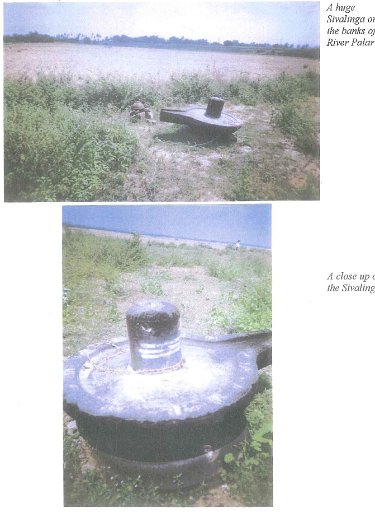

Birthplace of the 66th Acharya of Sri Kanchi Math
Remarkably, this sacred village of Udayambakkam holds profound spiritual significance in modern times as well: The 66th Acharya of Sri Kanchi Kamakoti Peetham, Jagadguru Sri Chandrasekharendra Saraswati VII (the illustrious predecessor and Guru of the Mahaswami's Guru), was born in this very village of Udayambakkam in the year 1891.

4. The Legal Rite of the Raja Sasana & Historical Significance
The royal charter (Raja Sasana) concludes with the solemn statement that the great Krishnaraya made this holy gift with immense joy and devotion, accompanied by the pouring of consecrated water and milk with gold — the sacred Vedic and legal rite for solemnising an irrevocable gift:
Importance of the Grant for History & Tradition
What is deeply significant about this epigraphical grant is that the most illustrious emperor of Vijayanagara, Krishnadevaraya, paid the highest homage to Acharya Sadasiva Sarasvati, hailing him as the very embodiment of Lord Shiva — Sivarupi, a Mahatma, and a Mumukshu — who was the reigning Acharya of the Sri Kanchi Kamakoti Peetham, as his title Sarasvati affirms.
The sublime description of the Acharya provided by Emperor Krishnadevaraya vividly brings to memory for present generations the divine persona of Kanchi Paramacharya Pujyashri Chandrasekharendra Saraswati Mahaswamigal, who lived amidst us in recent times as a walking divinity — a true Sivarupi. The sacred term Sivarupi occurs in the Upanishads, affirming that such an exalted, liberated sage attains supreme Kaivalya: Kaivalyam Padam-asnute.
5. Complete Inscription Plates (Plates VI to XVI)
Reproduced below are the high-resolution plates documenting the complete Sanskrit text of the royal charter in Nandi-Nagari / Telugu characters recording the grant:
.jpg)
.jpg)
.jpg)
.jpg)
.jpg)
.jpg)
.jpg)
.jpg)
.jpg)
.jpg)
.jpg)